 CHUTE PLATFORM
Chute Color Sorters
Review this route for free-flowing material that can be presented through channels under controlled feed conditions.
Review chute platform
INDUSTRIAL MATERIAL SORTING
Platform selection should reflect the material, visible defects, required throughput and actual line conditions. Explore by application or compare chute and belt platforms.
See how sample testing supports selection
EXPLORE BY APPLICATION
Material behavior and the defects visible in a representative sample provide the first direction for platform review.
 01
01
Review visible kernel defects and foreign material against the required accepted product.
View application 02
02
Start with bean condition, defect examples and the accepted-product requirement.
View application 03
03
Match crop flow, contamination profile and normal throughput to the presentation method.
View application 04
04
Check size variation, off-color material and impurities in a representative sample.
View application 05
05
Consider shell, visible damage, product fragility and stable presentation before selection.
View applicationMACHINE PLATFORM ROUTE
Chute and belt machines use different product-handling paths. Review the platform first; series and model selection comes later.
CHUTE PLATFORM
Review this route for free-flowing material that can be presented through channels under controlled feed conditions.
Review chute platform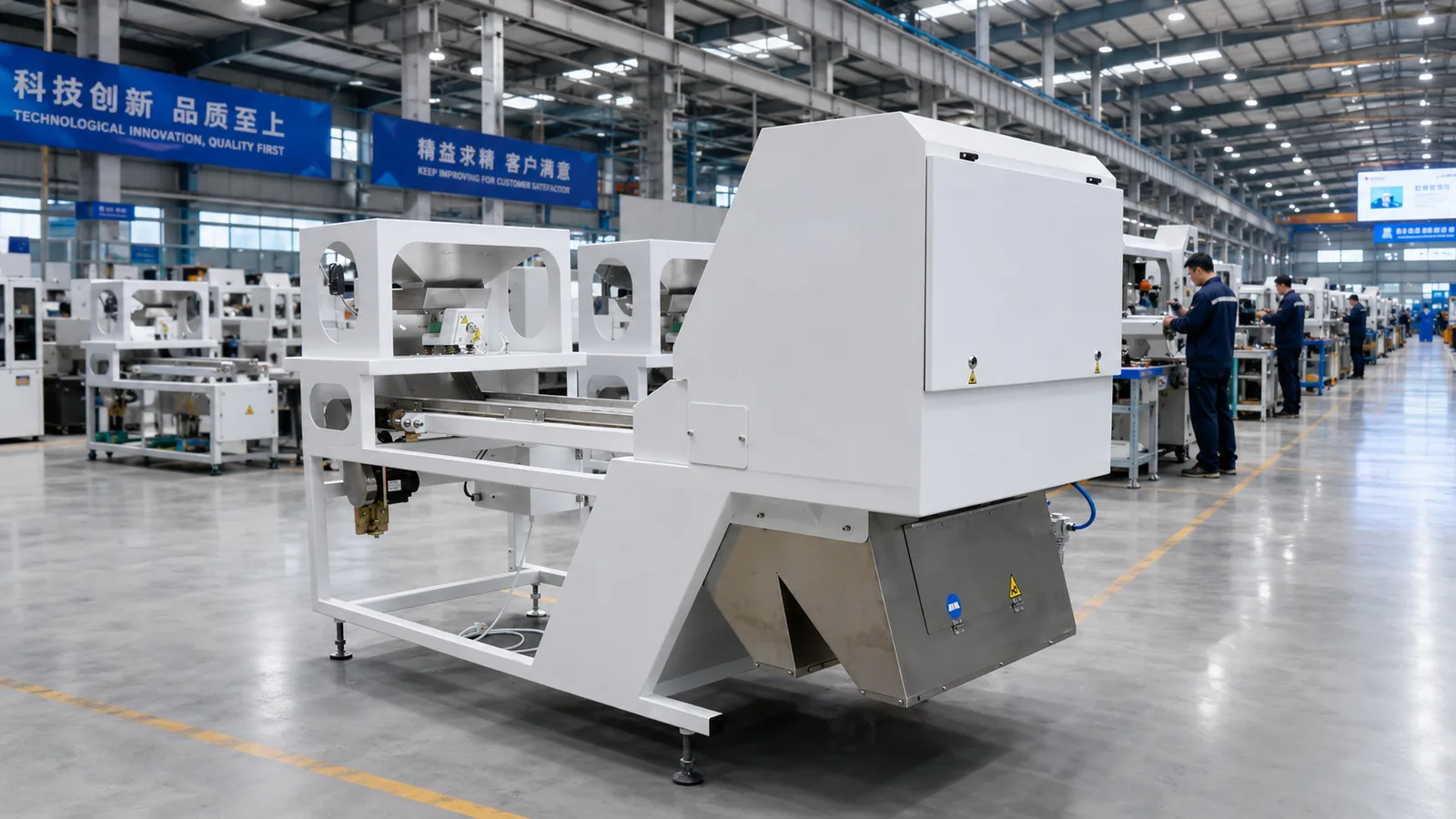 BELT PLATFORM
Review this route when stable conveyor presentation matters for fragile, irregular or less free-flowing material.
Review belt platformNeed to compare both routes before discussing a series?
Compare Chute vs BeltSAMPLE-LED SELECTION
A useful review considers the feed, accepted product, reject stream and overflow. Test conditions matter because separation and good-product carryover can change with the sample and line setup.
Review Sample Testing


BUYER & ENGINEERING RESOURCES
Prepare the surrounding line conditions before comparing a configuration or planning a sample review.
Explore buyer resourcesCOMPANY INFORMATION
Review the company information and contact route published on this website before moving into commercial or technical discussions.
Review Company InformationPROJECT INQUIRY
Share the information needed to begin a practical selection discussion. The existing contact form keeps the request in one place without creating a separate quote route.
Share the material you process, the visible defects you need to remove and your target throughput. If you can send a representative sample, we can plan the selection around real test conditions.
Share the material you process, the visible defects you need to remove and your target throughput. If you can send a representative sample, we can plan the selection around real test conditions.